A Slice of Texas – Sharing homesteading, home cooking, gardening, travel, living history, food storage and practical preparedness through firsthand experience.
One of my favorite ways to save money in the garden is by collecting seeds from healthy plants. Allowing a few bean pods to fully mature and dry on the vine provides seeds that can often be planted the following season. Seed saving has been practiced by gardeners for generations and is an excellent way to preserve varieties that perform well in your local climate.
Why I Love Kentucky Pole Beans
Kentucky Pole Beans are one of my favorite vegetables because they continue producing over a long harvest season when picked regularly. The vines grow vertically, making efficient use of garden space, and fresh-picked beans have a flavor that's hard to beat.
Fresh From the Garden
There's something especially satisfying about preparing a meal with vegetables you've grown yourself. Whether it's beans, peppers, onions, squash, or tomatoes, harvesting fresh produce from the backyard reminds me why I enjoy gardening so much. Even a modest harvest adds fresh flavor to the dinner table and makes all the effort worthwhile.
Not only has the cooler weather given my garden a boost, but since the temperatures have dropped to the 80's, I've had to do less watering!
They say we should save our seeds from the first batch of crops, but as my beans have become more energized, I'm allowing several "late season" beans to dry on the vine to save for later.
All my Kentucky Pole beans have been producing. I'm not picking "bucket fulls" a day, but I'm able to save enough to have the occasional stiry fry!
My favorite dish is to add olive oil to the wok, cubed beef with worcestershire sauce, and minced garlic. After meat is med well, I add whatever is available from my garden - squash, bell peppers, green beans, peas, onions, okra, and frozen vegetables from the grocery store - broccoli, and zucchini. Toss till heated, then serve with rice and soy sauce.
Guess what we had for supper tonight? Vegetable soup! Somewhat of a slim pick'ns, but it was nice to drop some homegrown veggies into a pot. "There's something especially satisfying about making a pot of vegetable soup from ingredients grown just a few steps from the back door. Even if the harvest isn't overflowing, those homegrown vegetables always seem to taste a little better."
Thankfully we had been getting some rain - over 15" worth! More than we needed all at once, but I was happy I didn't have to water my garden for a few days.
The temperatures are climbing back up, but the nights seem to be dropping into the 70's, giving all my plants a much-needed boost. Everything's blooming like crazy.
cantaloup
Why Cooler Nights Help a Texas Garden
After a long Texas summer, cooler nighttime temperatures can make a remarkable difference in the vegetable garden. While daytime heat encourages rapid growth, excessively warm nights can place added stress on many vegetables. As nighttime temperatures begin to drop, plants often recover from the summer heat and produce a fresh flush of blossoms and new growth.
Rainfall also provides a welcome break from daily watering, allowing moisture to soak deeply into the soil and encourage stronger root systems. Of course, too much rain at once can bring its own challenges, but healthy garden soil usually rebounds quickly once the weather settles.
One of the greatest rewards of gardening is watching the seasons change. Just when it seems the summer garden is beginning to fade, a little rain and a few cooler nights can breathe new life into tomatoes, peppers, beans, squash, and melons. Every year reminds me that patience is one of the most valuable tools a gardener can have.
Bell pepper plants as tall as my fence....
Melons....
More melons...
For awhile there, I didn't think my Patty Squash would make it, but now the blooms are holding on. I'll try and capture my thriving Kentucky Beans on my next post. They are finally blooming and I'm really hoping for a lot of beans before the winter sets in. This is something we eat a LOT of around here. Practically with every meal.
This morning our dog stayed outside extra long, which was very uncharacteristic of her. Usually she does her business then bark at the sliding doors.
Curious, we called out for her. She took her time coming to the door and was sporting a guilty look.
Dogs wear their emotions on their sleeve. I knew she was dying to tell me something. So, she followed closely at my heels when I reopened the door. She took off ahead of me, and led me to the fence of my garden. I looked down and found this baby squirrel.
You see, we've turned our dog into a monster. All we have to do is say the word squirrel, and she'll dash for the door in a frenzy. I don't like squirrels either. They like my garden too much!
But as I stared down at this helpless breathing creature, I sat aside all animosity.
So now it's wrapped all snug and cozy in a soft shirt.
Digging out the heat lamp that I had used for our baby chickens, I gingerly cradled the squirrel in an old box and sat it under two lights.
Following the advice of a website, I created an oral hydration solution of warm water, 1 tsp of salt, and 3 tsp's of sugar.
Keeping wildlife is against the law, so I requested help on Craigslist for volunteers, and had to cancel my post in less than 20 minutes! My phone was ringing off the hook. So, in about five more hours, a woman who is trying to get her wildlife license, will be over to adopt.
In the meantime, we won't be calling him a squirrel, because we taught our dog to dislike squirrels.
As for my garden, I will learn to get along with these furry creatures. Somehow.
I found this treasure at my local library for $1 in the used book section. A very handy guide on organic gardening. The author shares his philosophy on organic gardening, healthy soil, beneficial insects, and why even weeds can have a place in a balanced garden.
Book available still on Amazon I'm an Amazon affiliate and earn a small commission at no cost to you.
Why I Prefer Organic Gardening
The longer I garden, the more I appreciate working with nature instead of trying to control every insect and weed. A healthy garden is full of life. Bees pollinate flowers, ladybugs help control aphids, lizards feed on insects, and birds become natural pest managers. Every season reminds me that a balanced ecosystem often does a better job than chemicals ever could.
Organic gardening doesn't mean a garden will be perfect. There will always be weeds to pull and insects to manage, but I've found that encouraging beneficial wildlife creates a healthier and more enjoyable place to garden. Watching butterflies, bees, birds, and lizards become part of the garden is every bit as rewarding as harvesting vegetables.
For me, gardening isn't just about growing food. It's about becoming a better steward of the little piece of land I've been given and allowing nature to work alongside me whenever possible.
This video was really motivating about how gardening requires good stewardship in handling outdoor pests. When left alone, nature takes care of itself! If you're even thinking about organic gardening, watch this video! This man's garden is amazing and I really like his perspectives.
For a natural and more effective way of handling unwanted pests, Diatomaceous (pronounced - die-uh-toe-may-she-us) earth, can be used as a barrier around your home to prevent unwanted guests. This is of course, the BEST remedy, rather than using poisons that will harm ourselves, pets, and our environment. Diatomaceous Earth can be purchased at Lowe's, or your local feedstores. Some brands come in food grade, and is used for cattle consumption to ward off unwanted parasites, etc. I wouldn't use this on my plants, as the last thing I'd want to do is kill off the essential bugs - Lady Bugs, Praying Mantis, Beetles, Bees, etc.
Corn! This is the organic gourmet popcorn that I had purchased from an Amish store. Check out the miniature ears.
I have a bunch of reeds (bamboo-like) growing in my backyard, and these have served wonderfully as tall sticks for my pole beans. What I hadn't expected was the reeds to propagate! From all the watering, the reeds are now growing new leaves and enjoying their new home with the beans. I'm thinking that what I'll probably do is allow the potted reeds to continue growing, and use these for shrubbery and screens around my home. Of course in pots! Unfortunately, the reeds that are growing against my fence like to spread into my neighbor's yard! :(
Another reason why I refuse to use poison in my yard. Lizards! These are my garden's best friend. It's been a few years since we've fanatically sprayed our yard with poisons, and mosquito sprays. In some cases, we would hook up the garden hose and spray every week or so! (shudder) It is safe to say that the health of my yard is finally bouncing back. Each year my garden is improving.
My peas are blooming!
Some of my pole beans. Next year, I have plans to grow several more pots of these, doubling the size of my garden.
We are at the end of August and I can sense fall in the air, even though the temps are averaging 100 degrees. Last week, we were teased with a few cool mornings. I'm really looking forward to shutting the pool down, and just focusing on a winter garden, opening my windows, and baking fresh bread!
One of the most rewarding parts of gardening is saving seeds from healthy, productive plants. Allowing seeds to dry completely before storing them in a cool, dry location can help preserve them for future growing seasons. Seed saving not only saves money but also allows gardeners to continue growing varieties that have performed well in their own backyard.
Gardening Is Full of Challenges
Every growing season brings its own surprises. Some years it's drought, other years it's excessive rain, insects, or hungry wildlife. While it's disappointing to lose part of a crop, I've learned that gardening is as much about patience as it is about harvesting vegetables. Every season teaches something new and helps make next year's garden even better.
Even with a few setbacks, there is nothing quite like slicing into a homegrown melon that was picked fresh from the garden. Moments like that make all the hard work worthwhile.
I was forced to pick my melon early. Thankfully the Galian Israeli melons will continue RIPENING after being picked, unlike a watermelon. I also harvested a mini cantaloupe as well.
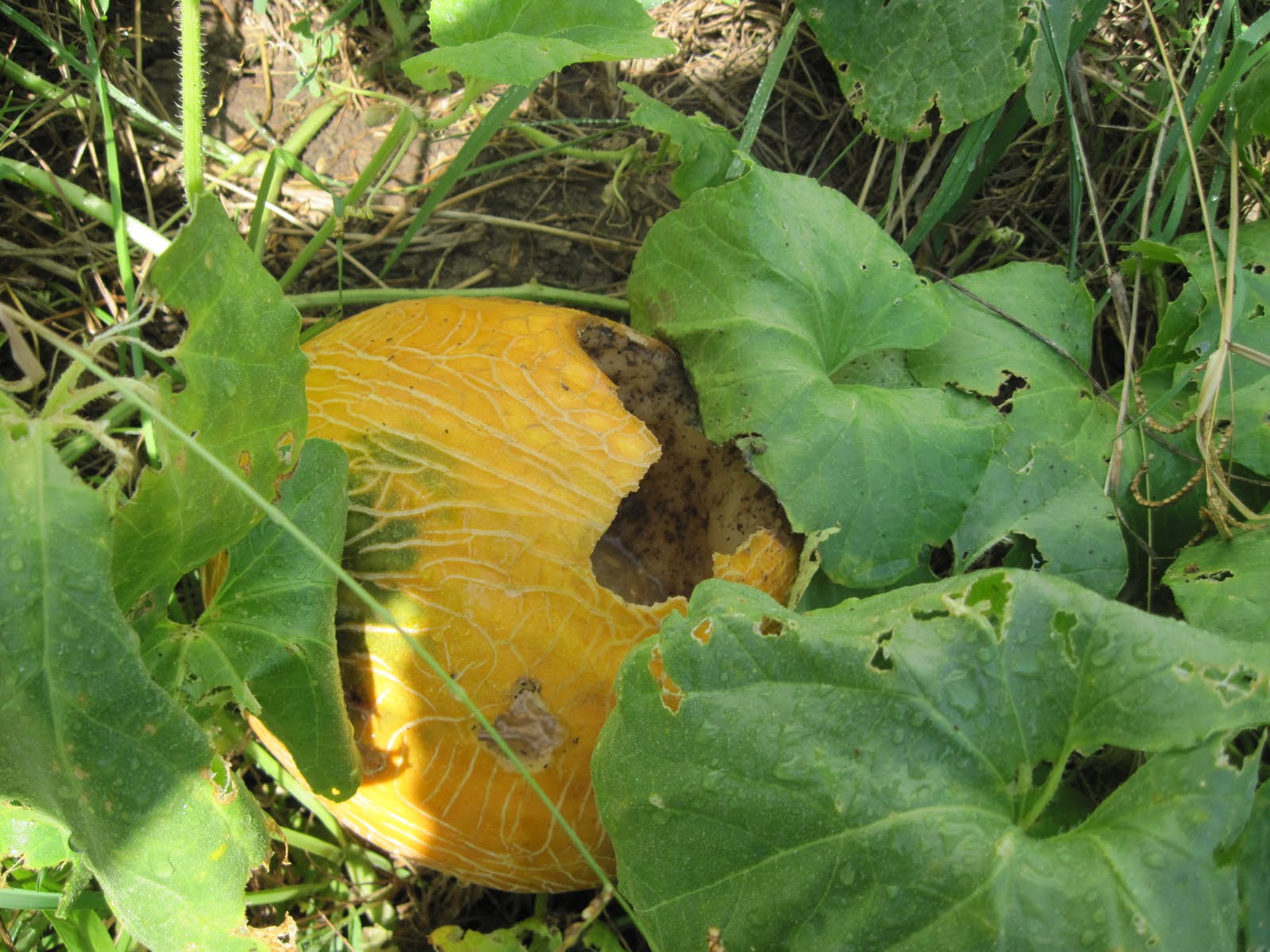
Obviously a very hungry and annoying creature likes my melon's too :(
:(
The last of the Mohicans. Undecided on whether I should just go ahead and pick it now, or see if it can survive a few more days on the vine.
The cantaloupe.
One of the surviving melons.
Delicious!
Saving seeds! Non-hybrid
After rinsed, the seeds will dry naturally in the greenhouse. Afterwards, they will be stored in a cool dry place.
This is what I'm battling. The garden seems to have reached the end of its first season. Growing (producing) has slowed down, if not completely stopped. My opinion is that it's the weather. The nights barely cool down, and we need rain. Lots and lots of it! Hoping for cooler weather!
I'm enthralled with the Asparagus - yardlong beans! They can grow 3 feet or more. Curious as to why these are growing faster than my other bean plants, I reread the seed packet and realized this bean variety LOVES sweltering hot weather.
Why I Love Growing Yardlong Beans
Yardlong beans, sometimes called asparagus beans or snake beans, are one of the best vegetables I've grown during a hot Texas summer. Unlike many garden crops that struggle through extended periods of heat, these beans seem to thrive when temperatures climb.
Despite their name, yardlong beans usually grow between 18 and 30 inches long, although some varieties can grow even longer under ideal conditions. The pods are tender when harvested young and can be enjoyed fresh in stir-fries, soups, and many Asian-inspired dishes.
Gardening Through the Texas Heat
Texas summers can be tough on a vegetable garden. Tomatoes often slow their production, lettuce bolts quickly, and many cool-season crops simply give up. That's why it's helpful to include heat-loving vegetables like yardlong beans, peppers, melons, and okra. Choosing crops that naturally enjoy hot weather can help extend the harvest even during the hottest months of the year.
Every growing season teaches me something new. Sometimes the biggest surprise isn't which plants struggle—it's discovering the vegetables that absolutely love the Texas heat.
Check out the bean on the right. It's too long for me to fit in the picture. I'm totally in love with this plant!
My cantaloupes have been battling the heat, but so far, I've spied two healthy melons.
My best plant so far is the Galia Israeli melons. I have several melons on the vine. You can see how they've changed since my last post. Once they turn yellow, they're ripe.
Bell Peppers are doing well.
This is the Fajita Bell variety. The red bell peppers are hotter than my Serrano, and Jalapeno peppers!
My onions are sprouting. This is the batch I had purchased from Whole Foods to grow my own. I have found it's sometimes cheaper to buy organic non-hybrid vegetables to cultivate my own seeds. This way not only do I get fresh vegetables out of the deal, but also more than enough seeds to save for years to come. The plant beside my onions to your left, I've forgotten what I planted. Don't you just hate that? I tend to do that a lot -- go nuts with the planting and forget where everything went.
~
My tomato plants are just plain not producing. I'm hoping that once things cool down, they will take off in the fall! This past week, I planted several pea plants, Malabar spinach, Kentucky pole beans, some more Zucchini, and for companion plants (to share pots with other veggies) I planted carrots and radishes.
Oh, my Israeli melons are doing WONDERFULLY! I've spied two large ones in the garden so far. I must confess though, I'm afraid to poke around the melon patch too much. The leaves are so huge and I just know there must be a snake lurking nearby. If I were a snake, I'd want to hide among the melons too. Those leaves make a nice cool shade!
Every Garden Has Its Challenges
One thing I've learned over the years is that no two gardening seasons are ever alike. Some plants thrive while others struggle, and every year seems to bring a new lesson. Heavy heat, insects, drought, or even an overly enthusiastic tomato plant can completely change the layout of the garden.
I've also learned that persistence often pays off. My okra looked completely finished after being stripped by insects, yet with regular watering and a little patience it recovered and began producing again. Experiences like this remind me not to give up on a struggling plant too quickly.
One of the joys of gardening is experimenting with different vegetables each year. Whether it's growing Israeli melons, pole beans climbing homemade bamboo trellises, or even planting popcorn kernels just to see what happens, every season offers the opportunity to learn something new. That's one of the reasons I never grow tired of gardening.
THANK YOU my wonderful mother for sharing all those beans with me. I used bamboo poles (growing wild in my yard) to use for bean poles. As you can see, the beans have sprouted and my frying pan is ready!
Gourmet popcorn that I had purchased from an Amish store in Missouri. Actually, I had purchased the kernels to pop, but decided to plant my own too! Er yes, I'm growing them together in a pot.
My melons taking over the garden.
Cherry tomatoes are doing well...
So this is my problem. It's this HUGE, HUGE tomato plant that is taking over my yard. I haven't googled it yet, but I'm thinking I'm going to have to PRUNE it by 50%! You can barely see my Bell Pepper to the left, nor my green beans to the right. It's a real hog and nuisance. Especially since it's blooming but not really producing.
Jumbo sized cucumbers. Nothing to brag about though. I only have two on the vine. The bugs are always hungry!
A sweet neighbor down the street gave me two peanut plants.
I'm especially pleased with my OKRA. I had revived my plants from the dead after they were overtaken by bugs. They were literally reduced to nubs. No leaves, no nothing. I kept watering hoping for a miracle. Persistence pays off!